
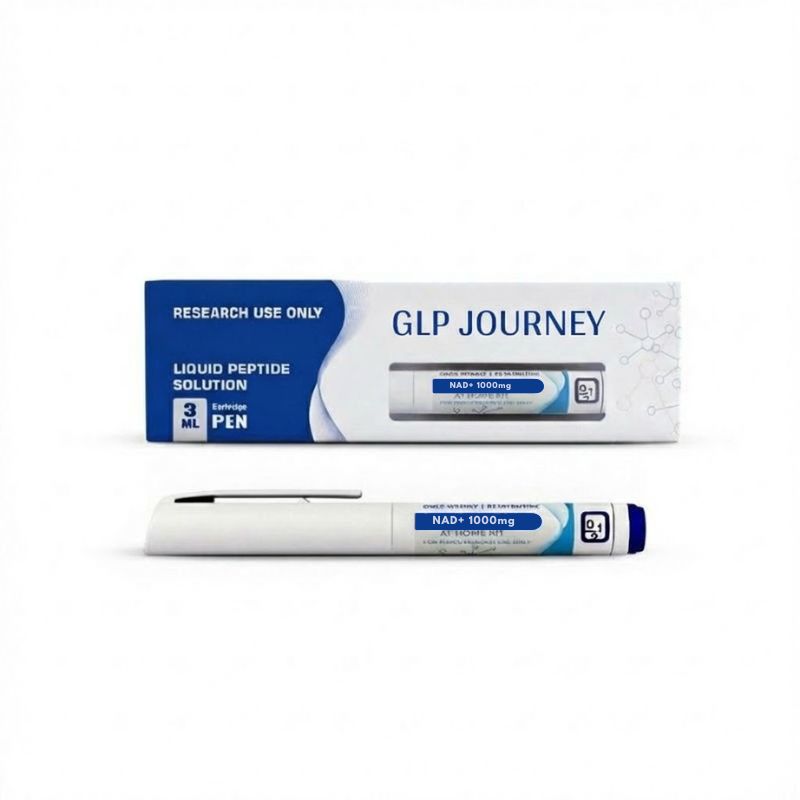
NAD+ 1000mg
£295.00 Original price was: £295.00.£195.00Current price is: £195.00.
White lyophilised material
Total content: 1000 mg
Research use only
NAD+ is not a trend compound. It is infrastructure.
It sits underneath a lot of metabolic and cellular work, which is why it rarely gets centre stage despite being involved in almost everything that follows. When researchers choose to work with NAD+ directly, it is usually because they want to look at system capacity, not just downstream effects.
Nicotinamide adenine dinucleotide is involved in redox balance, mitochondrial function, and cellular energy transfer. Because of that, it tends to appear in research that looks at how cells cope with demand, stress, or prolonged activity rather than short-term stimulation.
This material is supplied as white lyophilised NAD+, with no assumptions baked into how it should be prepared or applied. That is deliberate. NAD+ is used differently depending on the model, and fixed formats usually get in the way.
In research settings, NAD+ is often explored when questions shift from what happens to why it keeps happening.
It is commonly used to examine:
cellular energy availability
mitochondrial-related processes
redox cycling and balance
metabolic efficiency under sustained conditions
differences between baseline and stressed systems
Most of the useful data comes from longer observation windows. NAD+ does not tend to produce dramatic short-term changes, but it can reveal slow shifts that other compounds miss entirely.
Why 1000 mg matters in research
Lower quantities are fine for targeted work.
Larger amounts are usually chosen for extended studies, repeated preparation, or multi-phase projects.
A 1000 mg supply allows researchers to:
maintain consistency across longer timelines
avoid batch-to-batch variation
run parallel comparisons without changing source material
reduce interruptions caused by re-ordering
For labs running structured protocols, this is mostly about stability rather than volume.
Format notes
Lyophilised NAD+ remains the preferred format in many laboratories because it allows:
full control over preparation
clear documentation of concentrations
compatibility with multiple research models
flexibility when protocols evolve mid-study
NAD+ is not a compound that benefits from being locked into a single delivery system. The more complex the research question, the more that flexibility matters.
Storage and handling
Store refrigerated at 2–8 °C
Do not freeze
Protect from moisture
Limit prolonged light exposure
Preparation methods, working concentrations, and timelines should be defined and recorded according to internal research procedures.
Common research questions
What is NAD+ mainly used for in research?
To study cellular energy handling, metabolic regulation, redox balance, and how systems respond to sustained demand.
Is NAD+ considered experimental?
No in concept, yes in application. Its role is well understood, but how it behaves within specific models is still actively studied.
Is this a medicinal product?
No. This material is not licensed, approved, or supplied as a medicine.
Who is this product intended for?
Laboratories, institutions, and researchers working within documented, non-clinical research frameworks.
Important notice
This product is supplied solely for laboratory research and analytical investigation.
It is not intended for human or animal use and is not presented for diagnosis, treatment, or prevention of disease. Responsibility for lawful handling and use rests entirely with the purchaser.