Why It’s Important to Get Blood Tests Before and After a Cycle
When you run a cycle, it’s not just about building muscle; it’s also about what’s happening in your body.
Drugs can have a big effect on your endocrine system, heart health, liver, kidneys, and hormone balance.
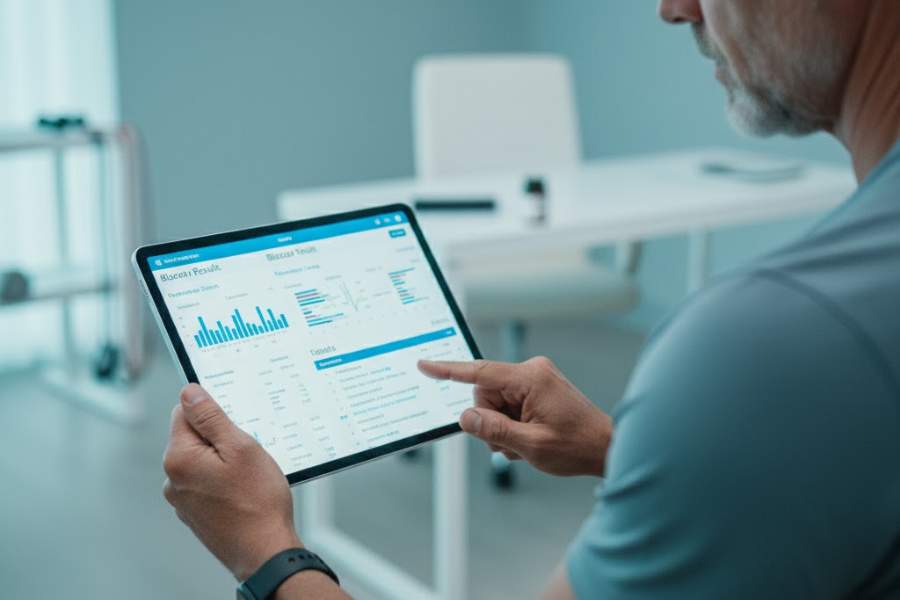
The only way to keep track of these changes accurately is to get bloodwork done.
We at GLPJourney believe that the best way to make sure that performance enhancement is safe is to have bloodwork done before and after a cycle.
A lot of lifters only care about how they feel, not biomarkers that can slowly get worse without them knowing.
Your hormones and lipids could be crashing, but you might feel great.
Or you might feel terrible after a cycle and not know which system needs help.
“Monitoring biochemical markers is essential in athletes using anabolic steroids, not only to detect adverse effects but to guide post-cycle recovery and prevent long-term damage.”
— British Journal of Pharmacology
The truth about your cycle, whether you’re just taking testosterone or a full stack, is in your blood tests before and after.
The Important Blood Markers to Watch Out For
GLPJourney says to check these important markers before starting or finishing any cycle:
-
Total Testosterone: The amount of androgens in the body as a whole (300–1000 ng/dL).
-
Free Testosterone: The best way to measure function; testosterone that is available for use.
-
SHBG (Sex Hormone-Binding Globulin): When SHBG is high, there is less free T, and when it is low, the metabolism has to work harder.
-
Estradiol (E2, Sensitive Assay): Stay between 20 and 40 pg/mL.
-
LH and FSH: Two important signs that the pituitary gland is getting better.
-
Prolactin: High levels may mean that 19-nor is being held back.
-
DHT (Dihydrotestosterone): Keeps track of how strong androgens are and how likely they are to cause problems.
-
Hematocrit and Hemoglobin: Watch out for blood that is too thick or could clot.
-
Lipid Panel (LDL, HDL, Triglycerides): Steroids can throw off the balance of cholesterol.
-
Liver Enzymes (AST, ALT): Watch out for hepatotoxic stress, especially with orals.
-
Kidney Function (Creatinine, BUN, eGFR): Check the health of the kidneys.
-
Glucose, Insulin, and A1C: Check during the cycle to see how metabolism and insulin levels change.
Getting Your Baseline with Bloodwork Before Your Cycle
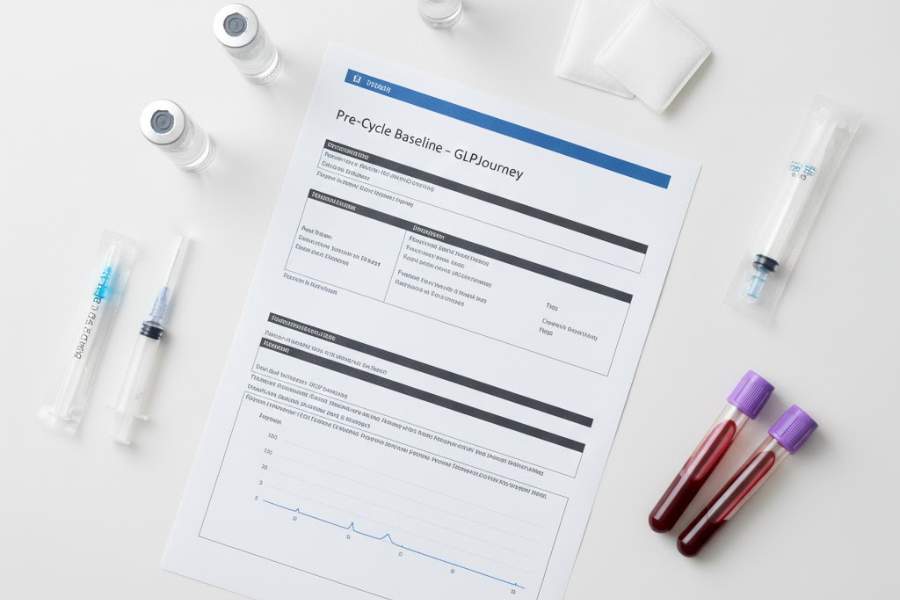
Before you touch any compound, GLPJourney says you should set your baseline.
You won’t be able to tell what’s normal or damaged later if you don’t get baseline blood work.
Testing your hormones, liver, and heart before you start a cycle makes sure they can handle the stress.
Your Pre-Cycle Panel Should Include:
-
Hormones: Total T, Free T, SHBG, E2, LH, FSH, Prolactin, and DHEA-S
-
Lipids: HDL, LDL, and Triglycerides
-
Liver & Kidney Tests: AST, ALT, GGT, Creatinine, and BUN
-
Glucose and Insulin
-
CBC and PSA (if you’re over 35)
You can read your bloodwork before and after a cycle correctly if you know your baseline.
During the Cycle, Keep an Eye On
Not testing in the middle of a cycle is like driving without a dashboard.
We recommend getting blood work done mid-cycle (Weeks 4–6) to look for warning signs like:
-
High hematocrit
-
Rising liver enzyme levels
-
Dropped HDL
-
Unbalanced estrogen
You can change the dose, help your liver stay healthy, or adjust aromatase inhibitors before things get worse.

Bloodwork After the Cycle: Checking on Your Recovery
After your last pill or shot, the real work begins.
After a cycle, blood tests can tell you if your HPTA (Hypothalamic-Pituitary-Gonadal Axis) has healed and if your PCT (Post Cycle Therapy) worked.
After a Cycle, Your Blood Work Should Look At:
-
LH and FSH: To help the pituitary gland recover
-
Total and Free Testosterone: To restore androgens to normal
-
Estradiol: To maintain balanced estrogen levels
-
Prolactin: To check suppression
-
Liver and Lipid Panels: To assess overall health
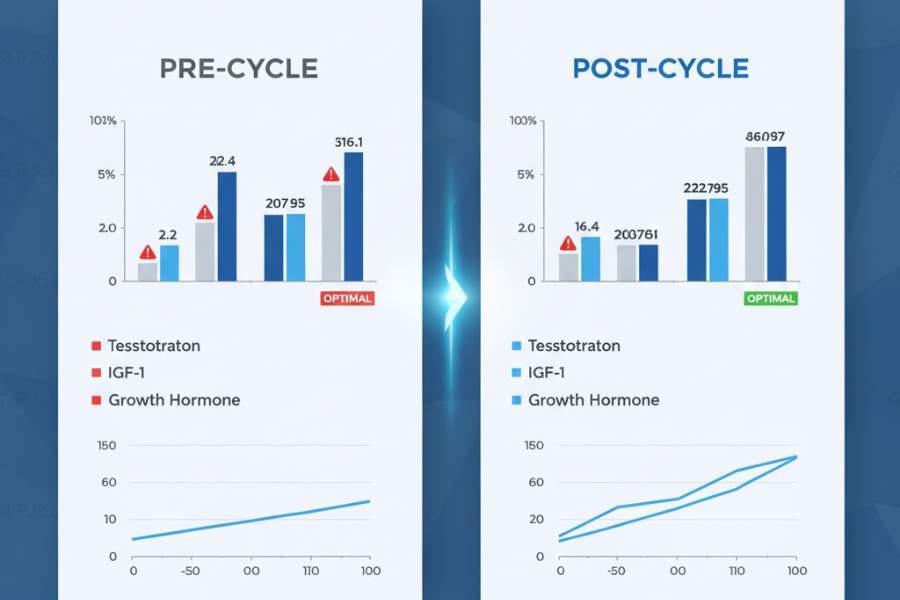
Look at your hormones again 4–6 weeks after finishing your PCT to see if they are back to normal.
Important Ratios and Signs to Watch Out For
When you look at your bloodwork before and after a cycle, it’s not just the numbers that matter — it’s the ratios as well:
-
Testosterone to Estradiol Ratio (15:1 to 30:1): Helps keep mood, sex drive, and recovery in check.
-
Free T : SHBG Ratio: High SHBG can hide low-T symptoms.
-
Recovery of LH and FSH: If both are low, recovery hasn’t happened yet.
-
ALT and AST Levels: High values indicate liver stress.
-
HDL / LDL Balance: Long-term imbalance increases cardiovascular risk.
Common Mistakes That Happen with Bloodwork
-
Only testing total testosterone
-
Using the wrong estradiol test
-
Testing too soon after the last shot
-
Ignoring baseline labs before the cycle
-
Confusing “normal” ranges with “optimal” ranges
Don’t do these things. Instead, let GLPJourney show you how to safely read your blood work before and after a cycle.
GLPJourney’s Tips for Getting Better
At GLPJourney, recovery means more than just taking PCT drugs — it’s about getting your health back to normal:
-
Zinc, Magnesium Glycinate, and Ashwagandha — Natural ways to help your testosterone levels recover
-
L-Glutamine and Probiotics — Support for your liver and gut
-
Krill Oil and Omega-3s — Keep lipids balanced and reduce inflammation
-
Good Sleep, Nutrition, and Hydration — For long-term hormonal stability
Your bloodwork before and after a cycle will show progress if you support recovery in all areas.
Keep an Eye on It to Make It Better
Knowledge is power.
By learning how to read your bloodwork before and after a cycle, you’re taking charge of your health, recovery, and long-term well-being.
By giving athletes and lifters structured education, clear lab interpretation, and smart recovery plans, GLPJourney helps them go from guessing to knowing.
It’s not just what you take; it’s also what you keep an eye on.